Moving can be a stressful endeavor at any time of year. But when you throw a Toronto winter into the mix? The complexity amplifies. Icy paths. Biting winds. Constant snowfall. We all know moving in the cold presents unique challenges. The worst part? These challenges demand meticulous preparation. For Toronto residents, winters are truly harsh. So it is no surprise that understanding how to navigate these challenges is crucial. Especially for a safe move.
This guide by MPR Movers will walk you through everything you need to know. We’re here to ensure your transition is as smooth as possible… even if it’s a snow move.
Tips for Planning Ahead When Relocating
Move planning or having a move schedule is crucial for a simpler move. The more you plan in advance, the better you’ll be at handling whatever the clouds throw at you. Still, make sure you have a Plan B kit too.
Allowing Flexibility for Weather Delays
You need to build in some “buffer days.” So that you don’t panic if things slow down.
Set a Flexible Moving Window: Try not to move on the very last day of your lease. You need a couple of days of wiggle room in case a big blizzard hits.
Talk to the Winter Movers: Keep your moving company in the loop as the day gets closer. If the sky looks scary, ask them for their advice on the best timing. Communication with movers is super important. Move coordination makes your winter move smoother. And you could even discuss a crisis plan with them beforehand.
Check Weather Forecasts
This might seem obvious. But many people forget to keep a close eye on the sky… until it is too late. So start monitoring the weather forecast for your moving date at least a week in advance. This helps you see the general trend.
Look for Snowfall Warnings: Heavy snow can make roads impossible to drive on for large vehicles. It can turn a simple two-hour move into an all-day struggle that costs more and exhausts everyone involved.
Watch for Freezing Rain: This is arguably the most dangerous condition. Because it creates a layer of “black ice.” It makes everything incredibly slick and makes walking nearly impossible. Even with the best boots.
Monitor Temperature Drops: Going to be “bone-chilling” cold? Think about more than just the roads. Extremely low temperatures mean you need extra blankets for your stuff.
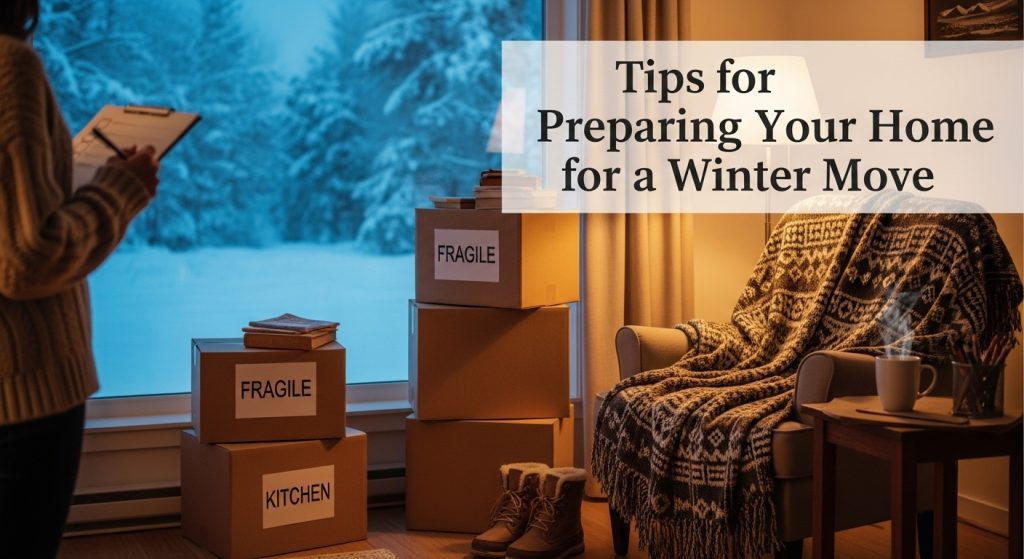
Tips for Preparing Your Home for a Winter Move
Before the first box even leaves the house, you need to make sure the “runway” is clear. You have to prepare both your old house and your new home so the movers can walk safely without sliding like penguins.
Clearing Snow and Ice From Walkways and Driveways
This is the most important thing you can do. Especially to prevent someone from getting hurt. A slip on the ice-covered sidewalks while carrying a heavy sofa is a disaster waiting to happen.
Ice removal on every inch of the path. You should clear the way from the front door all the way to the street. Do snow shoveling at both houses before moving truck arrives. This allows the workers to begin their business without delay.
Clear a wide passage. Movers do not walk alone. They often carry large items side by side. Ensure the path is wide enough for two people and a grand dresser to pass through. A narrow path is a trap for the clumsy.
Salt everything that shines. Ice is a deceptive enemy. Use rock salt or sand on any spot that looks even slightly wet. This provides a firm footing for those carrying heavy loads.
Keep salt near the door. The weather is often fickle. If it begins to snow again, you will want to re-apply the salt quickly. It is best to have a cold-weather bag ready at hand for such an occasion.
Look for hidden dangers. Snow can hide many uneven stones or holes in the garden path. You should clear the snow completely so every hazard is visible. It is better to see a stone than to trip over it.
Address the entrance steps. Stairs are the most perilous part of the journey. Scrape away every bit of ice from the porch and the steps. A single slippery step can lead to a very public and painful disaster.
Check the path throughout the day. The sun may melt the snow only for it to freeze again in the shadows. Walk the path every hour to see if it remains safe. Constant vigilance is the price of a move without injury.
Protecting Floors, Walls, and Entryways
Winter weather brings slush, mud, and salt indoors on the bottom of everyone’s boots. This can ruin your beautiful hardwood floors or leave permanent white salt stains on your carpets in minutes.
Lay Down Protection: Use heavy-duty floor runners or even flattened cardboard boxes taped together. This creates a “safe zone” for boots to walk on without ever touching your actual floor surface.
Cover the Stairs: Stairs get very slippery when they are wet or if a little snow gets tracked onto them. Make sure they are covered with something that has a bit of grip so no one takes a tumble while carrying a box.
The “Boot Station”: Have a spot right by the door with absorbent mats. This encourages everyone to wipe their feet well before stepping further into the house. This keeps the rest of the home dry.
How to Protect Your Belongings in Cold Weather Moving Process
The freezing cold can be just as mean to your stuff as a clumsy mover and poor moving timeline. Some things just aren’t built to handle minus-twenty temperatures for hours.
Fragile Item Handling
You have to be extra careful with certain items when the thermometer drops. They need a little extra “winter coat” to stay safe and functional.
Electronics Protection: This is a huge concern because of condensation. If you take a freezing cold TV and plug it into a warm wall right away, moisture can form inside and cause a short circuit. Let your electronics sit in the warm house for a few hours. Let them reach room temperature before turning them on.
Wooden Furniture: Cold air is very dry, and wood can crack, warp, or pull apart at the seams. Wrap your nice wooden tables and chairs in thick moving blankets to keep the temperature steady and protect them from the dry air. This goes for art protection and instrument protection.
Plants: Most houseplants will die if they are exposed to the Toronto cold for even a few minutes. Move them in your own warm car rather than the back of a freezing truck, and try to make them the very last things you load.
Liquids: Did you know that things like olive oil, cleaning supplies, or even soda can freeze and break their containers? If you have liquids, make sure they are in sealed plastic bins or kept in the warm cab of the truck where it stays above freezing.
Use a Proper Packing Strategy and Material
The right moving supplies don’t just protect your stuff from bumps. They provide thermal insulation for boxes from the frost. Using the wrong tape or thin boxes can lead to a lot of heartbreak. Here are the best packing supplies for winter moving.
Sturdy Moving Boxes: Use double-walled boxes for anything heavy. Cold cardboard can sometimes get a bit brittle or lose its strength if it gets damp from the snow, so you want the strong stuff.
Bubble Wrap and Blankets: These materials are great because they trap air, which acts as a natural insulator. Don’t be shy with protective double‑wrap. More padding means more warmth for your delicate dishes and glass. Also, getting waterproof packing materials will also be useful here.
Plastic Wrap: Use stretch wrap to keep your moving blankets tight against your furniture. This prevents the blankets from slipping off and also keeps snow and moisture away from your fabric chairs and mattresses.
Box Labeling: Mark boxes that are “cold-sensitive belongings” in big, bright letters. This tells the movers to put those specific boxes in the warm house first so they don’t sit on the cold truck all day.
How to Stay Safe When Moving During the Winter
Moving day is a heavy burden on the soul and the body. It is a trial that requires great care. While you may worry for your furniture, you must worry for yourself more. A broken chair is a pity. A broken spirit or a strained limb is a tragedy. When the winter air is sharp, you must be very sensible.
Here are seven ways to keep yourself in good health when moving during winter.
Dress in layered clothing. It is unwise to wear one heavy coat. You will become too hot while you work. If you wear several thin things, you can take one off. This keeps your skin dry. It prevents a sudden chill when you stop to rest.
Protect your head and hands. Much warmth escapes through the top of the head. You must wear stout hats as winter wear. Winter outerwear packing should be done to ensure protection. You should also find gloves that keep out the damp. Make sure they have a firm grip. A slippery box is a danger to everyone nearby.
Carry extra stockings. Nothing is so dampening to the spirits as wet feet. Keep a dry pair of socks in your small bag. Changing them halfway through the day is a great comfort. It feels like a small miracle when you are tired.
Walk with great caution. Do not hurry even if you are cold. The ground can be very deceitful when you’re moving in the winter. Ice hides under the snow and waits for a fast traveler. Especially after short daylight hours. Keep your eyes on the path. A steady step is better than a fast fall.
Lift with your knees. The cold makes your muscles very stiff. They are not as flexible as they are in the summer. You must always bend your legs to pick up a trunk. Do not put the strain on your back. Your future self will thank you for this kindness.
Take regular breaks by the fire. Every hour you should go inside. Get warm drinks on move day. Something like tea or cider. This helps your heart and your hands thaw out. It gives you the strength to finish the task without fainting.
Remember to drink water. You might not feel thirsty when the sun is hidden. However, your body is working very hard. You must drink water throughout the day. If you do not, you will find yourself with a headache. A dizzy head is a dangerous thing near a staircase.
If you follow these rules, you will reach your new house in safety. You will be ready to enjoy your new parlor by evening.
Tips for Protecting Furniture During a Winter Move
If you’re moving in winter, you need a moving checklist. Here are some moving in the winter tips:
Use Moving Blankets: Wrap everything in insulated moving blankets to provide insulation against freezing temperatures and a barrier against snow.
Double-Wrap with Plastic: Apply a layer of stretch wrap over moving blankets to prevent moisture from melting snow or slush from seeping into wood or fabric.
Avoid Direct Tape on Wood: Cold weather can make tape adhesive brittle or cause it to pull off finishes; always tape over blankets or plastic, never directly on the furniture.
Protect Your Floors: Use cardboard or floor runners at both locations. The goal is to prevent movers from tracking in salt and slush. This can scratch & stain hardwood.
Raise Furniture Off the Ground: If storing items in a garage or truck overnight, use pallets or blocks to keep furniture from sitting in potential puddles of melted snow.
Clear the Path: Shovel and salt all slippery walkways. Salt for driveways should be done thoroughly. A single slip can lead to dropped furniture and irreparable damage.
These tips for moving in the winter will make your move day easier. Even in off-season moving.
Here’s Why Experienced Winter Movers Are Essential in Winter
Moving in a Toronto winter is not just about heavy lifting. It is about navigating a season that rarely plays fair. It might be tempting to handle everything yourself. But the icy reality on moving day changes everything. That is why having an experienced team on your side is important. Trust us. It is a necessity to hire professionals for your peace of mind.
As one of the affordable winter moving companies in Canada, MPR Movers understands the city’s unique rhythms. We know how to handle the cold so you can stay warm. Here is why choosing a local professional makes all the difference:
Local Knowledge: We know which Toronto side streets turn into ice rinks after a flurry. And we know how to find the best routes to avoid hills that are dangerous for heavy trucks.
Moving Insurance for Movers: All our movers are insured, which is a huge relief. You won’t have to carry the burden of “what-ifs” liability coverage if a box slips on a patch of black ice.
Stress Reduction: No need to worry about driving a massive truck through a snowstorm or getting frozen fingers. Just focus on the excitement of your new home while we handle the heavy stuff.
Trained Personnel: Our moving crew is expert at balancing heavy furniture on slippery surfaces. We know how to protect your wooden items from the cracking cold and get your boxes inside before the wind chill bites. And our weather‑proof equipment makes it easier.
Hiring professional movers for winter relocation may cost less than during the peak summer season. Winter is simply an off‑peak moving season. So the low costs could be lower but that varies. Still, it’s better to have a moving budget. We offer transparent, hourly rates. And flexible scheduling for residential moving and a commercial local move across the GTA. If you want cheaper moving rates but efficient service, let us take the lead.
Conclusion
Moving in winter is less of a whimsical moment and more of a battle against an indifferent force of nature. Success requires a level of personal and vehicle preparation bordering on the obsessive: weather forecast monitoring & dressing in so many thermal layers that you’re more marshmallow than human.
We often harbor a quintessentially human desire to prove we can conquer the black ice alone. But sliding across frozen sidewalks with a dresser is not the vibe we’re going for. This is where we acknowledge our fragility and call in the experts. Professional movers provide the winter gear and peace of mind to ensure your spirit (and your mugs) stay intact. Reach out to MPR Movers to simplify the chaos of moving in winter months. Stay warm out there!
FAQ Section
Q1: What should I do if a blizzard is forecast for my moving day?
You should rethink the plan. Safety is the priority even when you are ready to be done with packing tape. Contact your movers immediately. See if they are still operating. Discuss a flexible timeframe and backup dates as soon as possible.
Q2: How can I protect my hardwood floors from slush and salt during a winter move?
Lay down heavy-duty floor runners across all high-traffic areas. Use old blankets and towels to catch the drips. But ensure they are taped down well. So they do not become winter hazards.
Q3. Best way to protect furniture during a winter move?
The best approach is to seal out moisture and insulate against the cold. Start by wrapping items in thick blankets. Then add a layer of plastic wrap to block out melting snow and road salt. Ask if your movers have insulated moving trucks and snow removal tools. They may be useful too. Always clear and salt your walkways to prevent drops. Let wooden pieces sit in your new home for a few hours before turning up the heat. This prevents warping. These winter moving tips will come in handy. No matter if you’re on a long‑distance move, a local move, or a cross‑country move.
Q4. How to find reliable winter moving services near me?
Search for local companies. Look for movers who offer flexible scheduling and transparent pricing. Those who promise no hidden surcharges. Check their reviews to ensure they are legit. Always have a quick call to confirm their weather-delay policy.
Immensely passionate for literature, Arsh-E-Bareen is a freelance writer. She writes content for many renowned firms, including this one. In her spare time, she loves to write sonnets and short stories that touch and inspire people. You can contact her on LinkedIn