Your Most Reliable Mississauga Moving Company


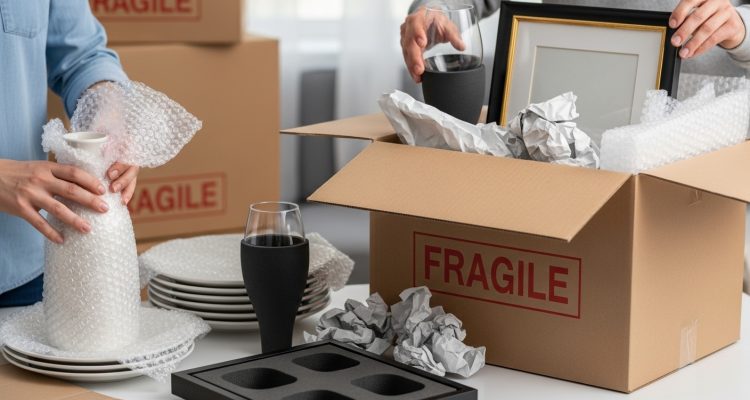
Ever opened a box after a move and heard that one small crack that immediately tells you something broke? That moment is why fragile packing matters so much.
So how do you actually handle packing fragile items for moving without things breaking? The answer is simple in theory. Use strong materials, wrap each item individually, cushion every side, and make sure nothing moves inside the box.
But the reason things still break is because one of those steps gets skipped. Maybe the box isn’t strong enough. Maybe there’s empty space inside. Or maybe items weren’t wrapped properly. During a move, even small shifts create pressure and impact. And that’s what causes damage.
That’s why fragile item moving is less about being “careful” and more about being structured. When you follow the right process even long-distance or fragile items moving conditions become manageable.
This guide by MPR Movers and Packers talks about exactly how to handle packing fragile items properly.
Fragile doesn’t just mean glass. It includes anything that can crack, scratch, dent, or stop working when exposed to pressure or movement. That’s why fragile items packing requires a broader mindset.
Think about it this way. If an item can be damaged by shifting inside a box, it needs protection. This includes glassware, ceramics, mirrors, electronics, artwork, lamps, and even certain furniture pieces. Items like TVs or appliances may seem sturdy, but internally they’re just as vulnerable as glass.
Kitchen items are another big category. Plates, bowls, and mugs are commonly damaged simply because they’re packed incorrectly. This is where a proper delicate items packing guide becomes important. It helps you identify what needs extra care before it’s too late.
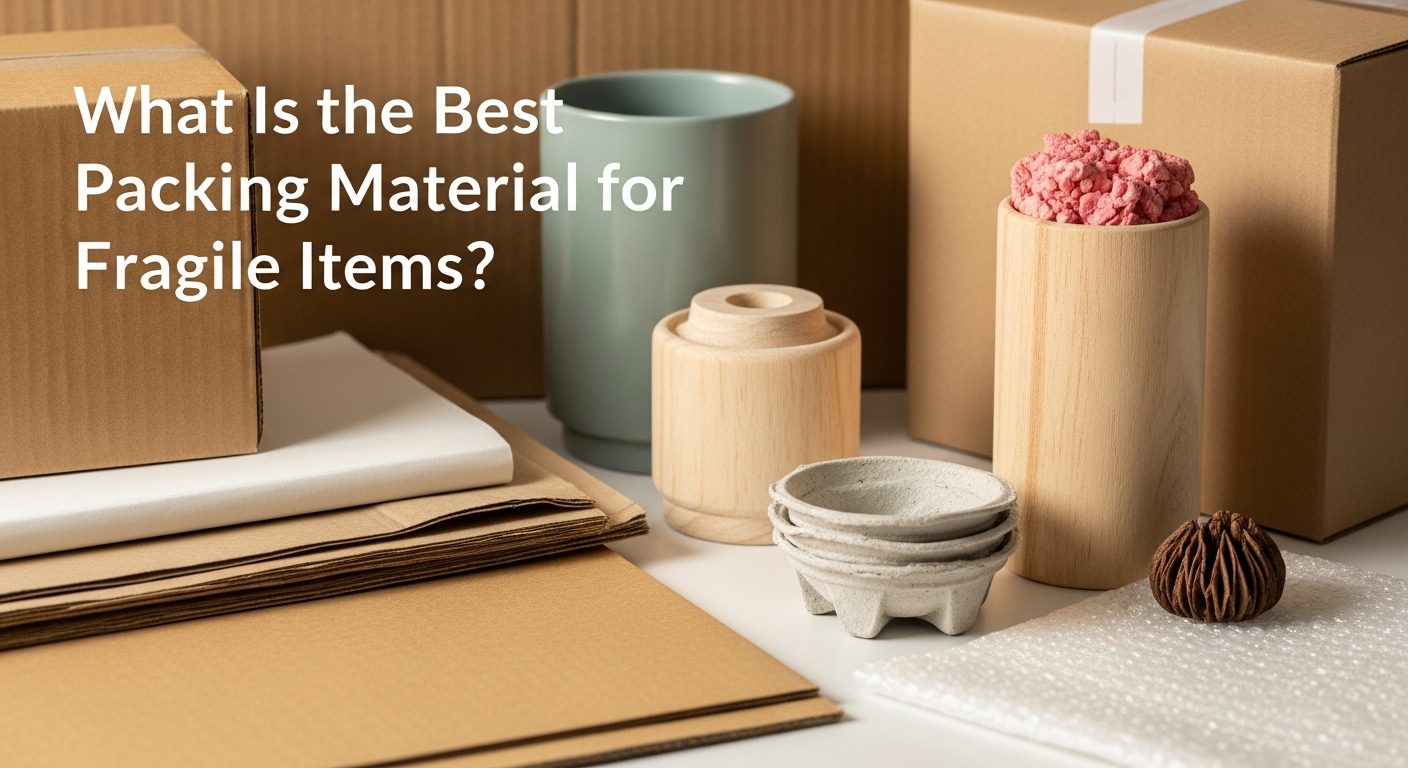
The right packing material for fragile items absorbs shock as well as prevent movement during transport.
Good packing materials for fragile items work together in layers. Each one serves a specific purpose, and skipping one often leads to problems.
Bubble wrap is widely used because it absorbs impact effectively. However it works best when combined with packing paper for fragile items which protects surfaces and fills gaps more precisely. Foam sheets are useful for delicate finishes… especially for electronics or polished items that scratch easily.
Void fillers like packing peanuts or crumpled paper are just as important. They stop movement inside the box. That is one of the biggest causes of damage. For larger items, moving blankets for fragile items provide thick cushioning.
This combination forms the base of effective fragile packing.
Weak boxes transfer pressure directly onto your belongings. Strong corrugated boxes for fragile items provide structure & hold their shape under weight. Smaller boxes are often better for heavy items… because they reduce shifting and are easier to handle safely.
For added protection, double-boxing fragile items creates a buffer zone that absorbs external impact. Specialty boxes like dish packs and mirror boxes are also worth using. Especially when dealing with packing fragile kitchen items or large flat surfaces.
If you don’t have access to standard supplies, there are still practical options.
Towels, clothing and linens can act as cushioning when wrapped properly. They’re especially useful for filling gaps or wrapping medium-risk items. Newspaper can also be used. But it’s best to avoid direct contact with delicate or light-coloured surfaces due to ink transfer.
Many Canadian moving supplies now include eco-friendly alternatives as well. These options reduce waste while still providing the cushioning needed for safe fragile items packing.
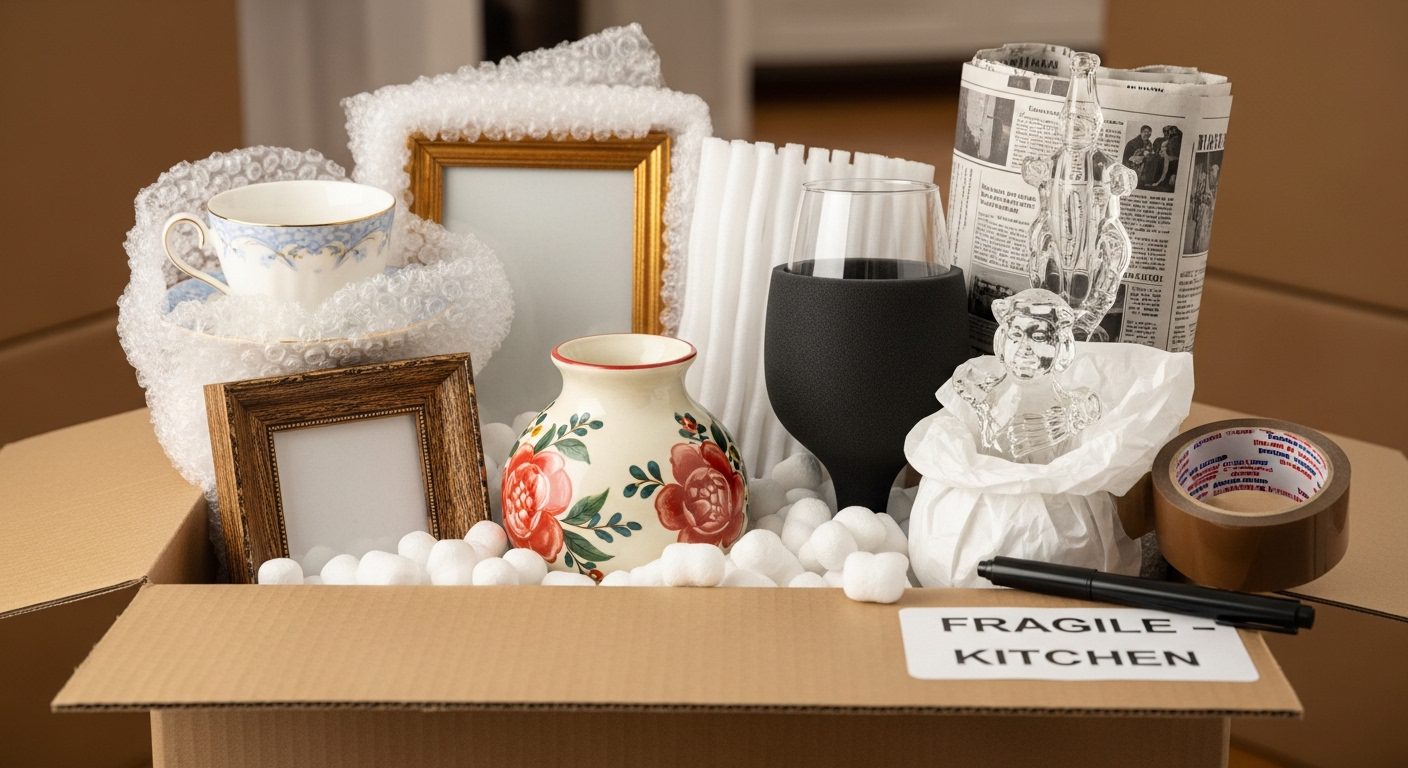
This is where most of the protection actually happens. Following a proper method is key to how to pack fragile items for a move safely.
Before you begin packing fragile items for moving, take the time to organize. Declutter anything you don’t need. Then group similar items together. This makes packing more efficient and reduces the chances of mixing incompatible items in the same box.
It’s also important to gather all your packing supplies for fragile items beforehand. Stopping midway often leads to rushed decisions which is where mistakes happen.
Wrapping is where real protection begins. Each item should be wrapped individually using a combination of packing paper and cushioning material.
Start with a layer of paper to protect the surface. Then add bubble wrap or foam for impact resistance. Pay extra attention to edges, corners as well as the thin parts. These are the most vulnerable areas. Proper protective wrapping techniques ensure that even if items shift slightly, they won’t come into direct contact.
A box should never be empty at the base. Before placing anything inside, create a cushioning layer using crumpled paper, foam or peanuts.
This base absorbs vibrations from below which are common during transport. Adding padding along the sides also helps create a protective barrier around all edges.
How you place items matters just as much as how you wrap them. Heavier items should always go at the bottom creating a stable base. Lighter and more delicate items should be placed on top.
Empty spaces should be filled completely. If items are able to move inside the box, damage is almost guaranteed. This step is essential for moving breakable items safely.
Once packed, seal the box securely using strong tape. An H-pattern across the top helps reinforce the structure.
Label the box clearly as “Fragile” and add orientation arrows. This is a small step, but it plays a big role in safe handling during fragile item relocation tips.
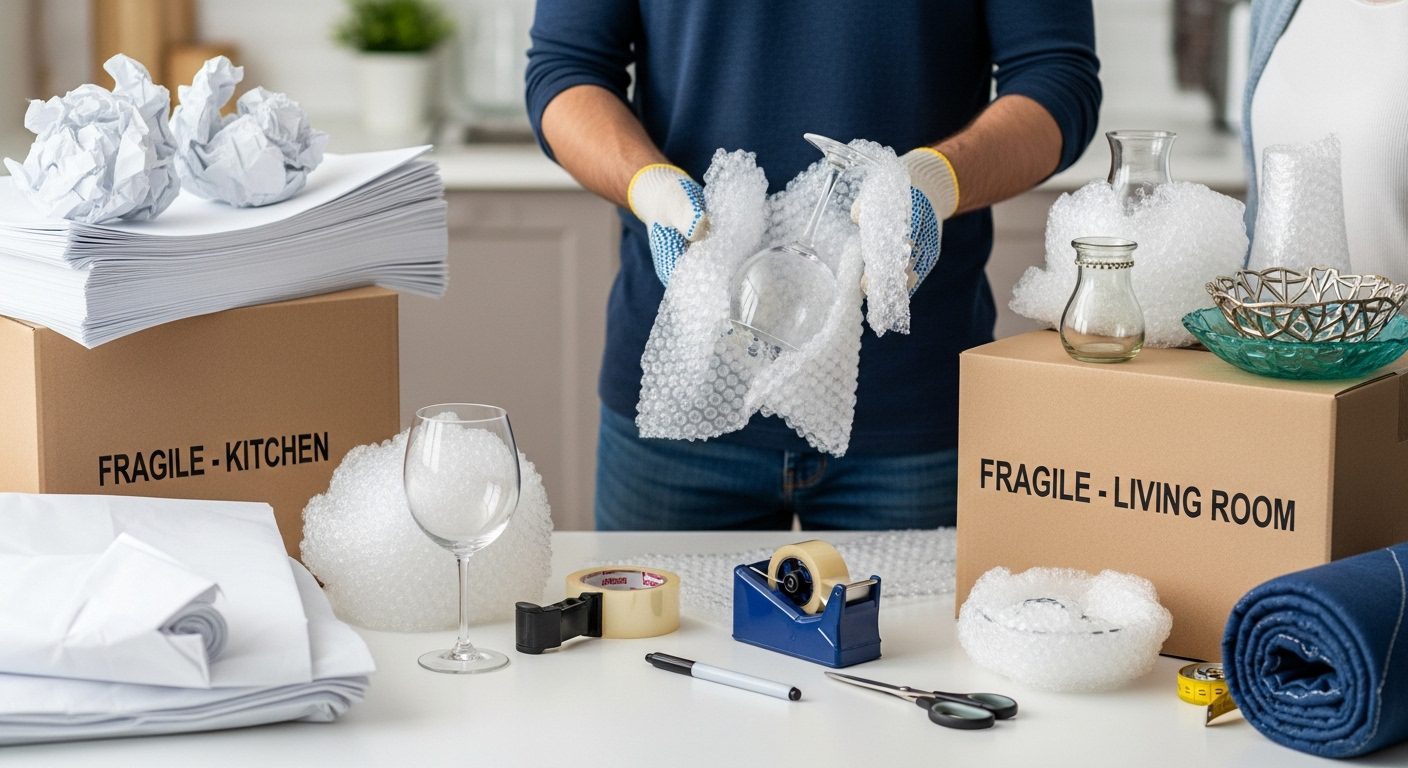
Glass requires a slightly different approach because it cannot absorb impact. It simply breaks under pressure. That’s why packing glassware for moving in Canada needs more precision.
Each piece of glassware should be wrapped individually to prevent contact. Using dividers inside boxes helps keep items separated and reduces movement.
Stemware is especially delicate due to its structure. The stem should be wrapped separately before covering the entire piece. Keeping these items upright helps reduce pressure on the most fragile parts.
Plates and bowls should be packed vertically rather than stacked flat. This allows them to handle pressure along their edges, which are stronger.
Dish pack boxes are ideal here as they provide structure and support for china and dishware packing.
Some items require more advanced methods. Especially when dealing with high value or extreme delicacy.
This method creates a protective buffer by placing one box inside another with padding in between. It’s one of the most effective ways to protect items during shipping fragile items safely.
Foam adds a dense but soft layer of protection, ideal for items that can scratch or crack easily.
For irregular or valuable items, custom solutions ensure a tight fit. This eliminates movement and provides better protective packaging for moving.
Extra cushioning on all sides is essential. The goal is to prevent any direct contact between the item and the box walls during moving fragile household items.
You don’t always need bubble wrap. There are practical alternatives that still provide effective protection.
Using multiple layers of packing paper creates a strong protective barrier. It’s one of the simplest ways to handle packing fragile items… without plastic materials.
These materials are great for wrapping and filling gaps. They naturally absorb impact and are useful for packing for fragile items in a cost-effective way.
Cardboard can be used to create dividers or reinforce structure inside boxes. It helps distribute weight more evenly.
Eco-friendly materials are becoming more common in packing materials for fragile items. They offer protection while reducing waste especially useful for environmentally conscious moves.
Electronics need careful handling because damage isn’t always visible. Internal components are sensitive to impact, static and temperature.
Original boxes are ideal because they’re designed for the item. If unavailable, use sturdy boxes with proper cushioning for moving fragile electronics safely.
Anti-static materials protect electronics from electrical damage during transit. This is especially important for sensitive devices.
Cold weather can affect electronics especially during winter moving fragile items Canada. Let devices adjust to room temperature before turning them on.
Keeping cables organized and labelled prevents confusion and damage. It also makes setup easier after the move.
Special Packing Tips for Different Fragile Items
Different items require slightly different handling methods. Understanding these differences improves overall safe packing for moving.
Artwork should be wrapped carefully and protected at the corners. Proper packing artwork and paintings Canada methods prevent bending and surface damage.
Applying tape in an X pattern helps reduce shattering risk. Combined with proper wrapping mirrors for moving this adds an extra layer of safety.
Disassembling lamps reduces risk. Each part should be wrapped separately when packing lamps and light fixtures.
Porcelain and collectibles require individual wrapping and secure placement. Careful handling is key for moving porcelain collectibles and other delicate items.
Packing is only half the job. Transport determines whether your effort pays off.
Fragile boxes should be loaded last and placed on top. This reduces pressure and handling during local moving fragile items.
Heavy boxes can crush fragile ones underneath. Keep fragile items in low-pressure areas.
Maintaining proper orientation helps protect contents and supports moving fragile items by car.
Smooth driving is essential. Sudden stops and sharp turns increase risk, especially during moving fragile items internationally or long-distance trips.
So when we talk about packing fragile items properly, it really comes down to a few things done right. Strong boxes, individual wrapping, proper cushioning on every side as well as making sure nothing is shifting inside the box. That’s the system. And when that system is followed, most of the usual breakages people deal with during a move just… don’t happen.
And the thing is, it is never really one big mistake that causes damage. It’s usually small things. A gap left empty. A layer skipped. A box that wasn’t strong enough. And during transport those small things add up fast.
So whether it’s local shifting or something bigger like fragile items moving in Canada, the approach stays the same. Slow it down. Build layers. Don’t leave space for movement.
At the end of the day, packing fragile items for moving is really about control. Control over how things are placed, how they’re protected and how they move from one place to another.
And if you don’t want to deal with the stress of figuring all of this out on your own, that’s exactly where MPR Movers and Packers comes in. We handle the packing, the protection and the transport. You can count on us to keep things safe from start to finish. So you can focus on the move itself. And we’ll make sure everything that matters gets there in one piece.
Honestly, yeah. Get them out, check everything. And settle them somewhere safe. It just gives you peace of mind right away.
Honestly earlier than you think. Give yourself at least a week or two. Fragile stuff just takes longer, you can’t rush it and expect everything to survive.
Yeah you can, but only if you do it right. Wrap everything separately. And don’t let anything touch, if they’re clinking… they’re probably breaking.
Super simple test. Just give the box a little shake. If you feel anything move you’re not done yet. Add more until it feels tight and secure.
Keep them on the lighter side. People always try to maximize space but then the box gets too heavy and harder to handle which kind of defeats the purpose.
Not really. If you have no choice then keep them on top. And don’t put anything heavy over them. That’s where most damage happens.
Keep them upright, snug as well as supported. Use blankets or soft stuff around them so they don’t slide around every time you stop.
Yeah, you should. Write “Fragile” clearly, big enough to notice. And add arrows too, it helps people handle the box the right way.

Immensely passionate for literature, Arsh-E-Bareen is a freelance writer. She writes content for many renowned firms, including this one. In her spare time, she loves to write sonnets and short stories that touch and inspire people. You can contact her on LinkedIn