
Your Most Reliable Mississauga Moving Company


Moving within Canada might sound like it’s a simple change of address, but the moment you cross a provincial border, you’re actually walking into a new legal and administrative system. If you already didn’t know, each province runs its own healthcare plan, licensing rules, tax structure as well as school system. So, what does this mean? It means an interprovincial move requires far more planning than a local one.
This guide by MPR Movers sheds light on everything that you need to know, starting from the initial research phase to settling into your new home.

Yes. Canadians are free to move between provinces at any time.
The physical process looks a lot like any other move. What makes it more complex is that provinces operate as separate jurisdictions with their own governments, programs, and regulatory bodies so your paperwork doesn’t automatically follow you.
Moving provinces triggers a handful of provincial differences that touch nearly every part of daily life. Healthcare system differences are among the biggest. Because the public health system is administered at the provincial level, your existing coverage won’t transfer automatically. You’ll need to register in your new province as soon as you arrive.
Income tax differences also come into play since provincial tax rates vary widely and directly affect your take-home pay and cost of living.
On top of that, driving credentials, vehicle registration and even school curricula are tied to the province you live in. Not the country as a whole.
Before you go, there’s a stack of official paperwork moving that needs your attention. A government ID update is essential. This includes your driver’s licence, health card, and voter registration. You’ll also want to handle legal documentation update tasks like reviewing your will and power of attorney so they align with your new province’s laws. If you work in a regulated field such as nursing, teaching, or a skilled trade, professional licensing requirements mean you may need to apply for credential recognition before you’re cleared to work in your new location.
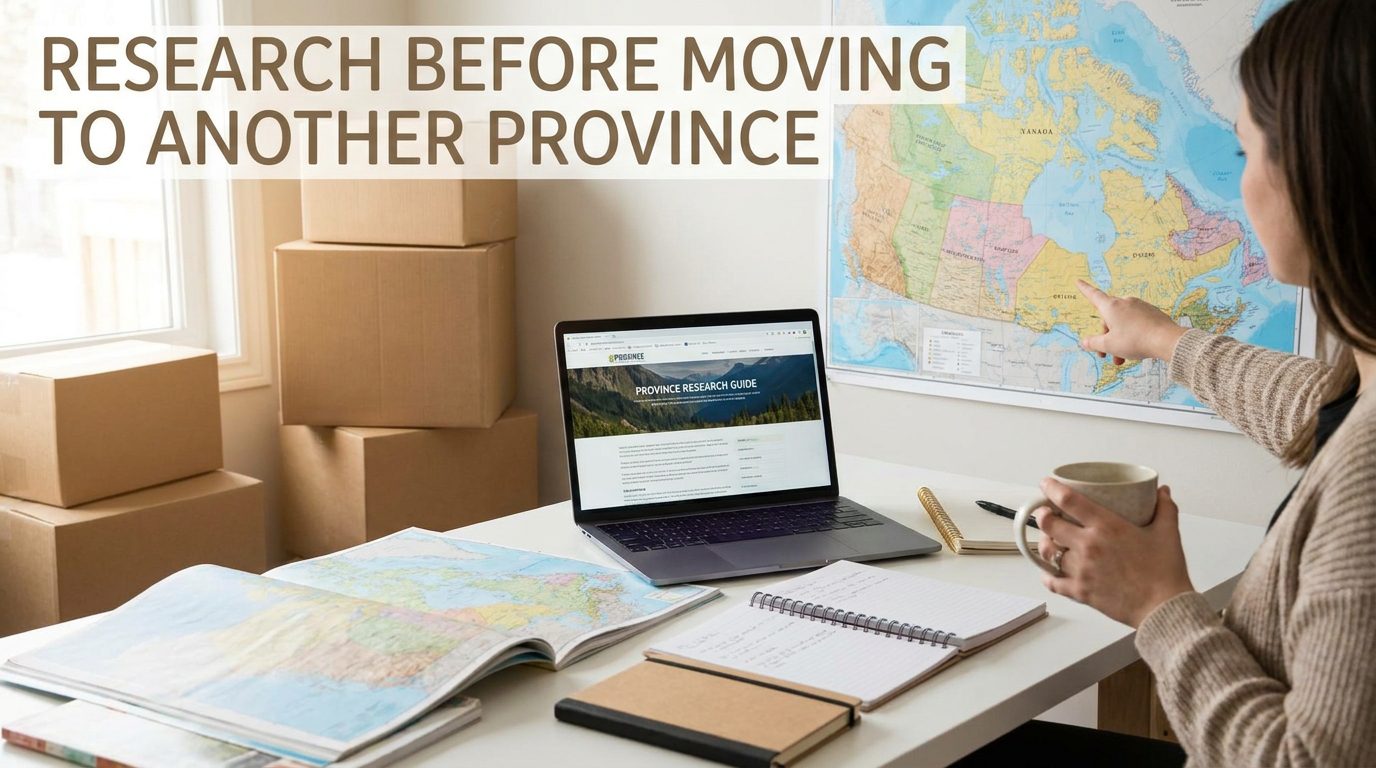
Solid research is what separates a smooth move from a stressful one. Ideally, you’ll want to start digging into your destination 8 to 12 weeks ahead of time.
Cost of living differences can be significant depending on where you’re headed, so a proper housing cost comparison is a smart first step. This includes weighing rent vs buying house decisions and scouting affordable housing options in your target neighborhoods. Beyond housing, factor in grocery expenses planning, monthly expenses planning, and utility costs comparison, since providers and rates change from province to province. Don’t forget transportation costs either: a fuel cost comparison, a salary comparison against your current earnings, and an insurance cost comparison for auto and home coverage will give you a realistic financial picture before you commit.
If your move isn’t tied to a confirmed job, job opportunities research should happen well in advance. Look into work opportunities province by province, run an employment market analysis for your field, and explore career opportunities relocation might open up. A bit of job search before moving goes a long way, and it’s worth pairing that with business environment research and a look at general economic conditions province-wide. If your role allows it, remote work flexibility can also widen your options considerably.
Canada’s geography is vast so climate differences between provinces can be dramatic. Do some weather research to understand seasonal weather conditions since regional climate variation and seasonal changes will affect everything from your wardrobe to your utility bills. Preparing clothing for new climate conditions, whether that means serious cold weather preparation or adjusting to summer weather differences, makes the transition easier. Beyond the forecast, weather impact lifestyle considerations matter too: a new city lifestyle often comes with a different pace, local culture understanding, and sometimes real cultural differences or language differences that shape your day-to-day social life changes.
Beyond the numbers, community research helps you feel grounded before you arrive. Spend time on new province research and general location research tips, and if you can, spend time actually exploring new province neighborhoods in person or virtually. A side-by-side province comparison can clarify what living in new province surroundings will really be like day to day.
Once you’ve decided to move, a moving provinces checklist keeps the process from becoming overwhelming. If you’re wondering how to move from one province to another in Canada, here’s the checklist to save.
Relocation planning starts with the numbers. Solid financial planning relocation means building out a moving budget planning early, since the cost of moving can vary enormously by distance and volume. When moving to another province in Canada, create a full expense checklist that accounts for moving expenses, a realistic relocation cost estimate, and often-overlooked hidden moving costs. Remember to include travel expenses like fuel and hotels, because long distance moving cost estimates frequently miss these extras.
This is where the address change process really kicks in. Beyond notifying the essentials, prioritize your government ID update and legal documentation update tasks, and keep a running list of official paperwork moving items so nothing gets missed. The driver license transfer deserves particular attention, most provinces have a license exchange process window of 60 to 90 days, alongside the vehicle registration process and vehicle license plate change requirements for your car.
Because provincial health insurance doesn’t transfer automatically, healthcare access should be one of your top priorities. Start the health card registration process as soon as you arrive, and be aware of the healthcare waiting period, which runs up to three months in most provinces. During that stretch, your medical coverage transfer isn’t instant, so it’s worth doing a medical benefits comparison between your old and new provinces and considering private insurance to bridge any insurance coverage gap, especially for prescriptions.
Utility management means you’ll need to cancel old utilities at your previous address and plan a service provider transfer to new utility providers in your destination. Treat this as a home utilities setup and home service setup from scratch, book your electricity connection, gas connection setup, water services setup, and internet installation a couple of weeks ahead to avoid gaps in service.
Before you settle in, get familiar with the public transportation system in your new city, including transit availability and whether a monthly transit pass makes sense for your commuting options. Think through your daily commute planning and weigh your mobility options. Car vs. public transport is a real decision in cities with strong transport infrastructure. Also study the local driving rules, provincial requirements and confirm your car insurance transfer with a locally licensed provider.
Many people wonder, “Can we move from one province to another in Canada?” The short answer is: yes. But there is a lot you have to do before the moving date that you may not realize right now. Sure, there’s packing and saying goodbye to your friends. But there’s also a strict timeline to follow and weigh the pros and cons of hiring professional movers.
Here’s our take on how to move to a different province with ease.
A clear moving timeline keeps everything on track. Good moving preparation tips usually start with a phased moving checklist, broken into 8-12 weeks, 4-6 weeks, and final-week tasks. These organization tips, paired with general moving advice and moving tips and tricks, help you avoid last-minute scrambling.
Choosing between professional movers and a DIY approach comes down to budget, distance, and how much stuff you’re bringing. Look into hiring movers tips and get several quotes before comparing DIY moving vs movers on cost and convenience. Moving company services and packing and moving services can save you physical strain, but moving company cost climbs with your crew size and how long the job takes.
If you’re moving within the GTA or relocating into Ontario, MPR Movers prices by the hour with no hidden fees:
Additional movers run C$40/hour and additional trucks C$60/hour with storage available from C$1 per sq ft per week and packing materials billed as per the purchase invoice.
For a true cross-country move, long-distance pricing usually works differently, based on the weight or volume of your belongings and the distance travelled, rather than an hourly rate. It’s best to get a custom quote so you know exactly what your move will cost before booking.
Furniture transportation is one of the priciest parts of any long-distance move, so logistics planning matters. Decide early which pieces are worth the freight, since safe transportation items like antiques, pianos, and disassembled furniture often need specialized handling. A few long distance moving tips, such as disassembling large pieces, protecting them with blankets and wrapping, and labeling everything clearly, go a long way toward keeping your belongings intact.
Getting your boxes into the new place is only half the job. Settling in properly takes a bit longer. Between adjusting emotionally to the change and finding your footing in a new city, here’s what the settling-in process actually looks like.
Settling into new area routines takes time. Environmental adaptation is both practical and emotional. The adaptation period often includes some emotional adjustment to moving and it’s normal to feel some moving stress management challenges in the first few weeks. Give yourself grace during this life transition planning phase, since relocation challenges tend to ease once the paperwork is done and routines are set in.
Community integration happens gradually. Meeting new people through local events, hobbies, or your kids’ school is one of the fastest paths to social adaptation. Embracing the lifestyle changes that come with a new place, rather than resisting them, tends to lead to a more successful moving experience. A smooth relocation process is really just the start of new beginnings in your new home.
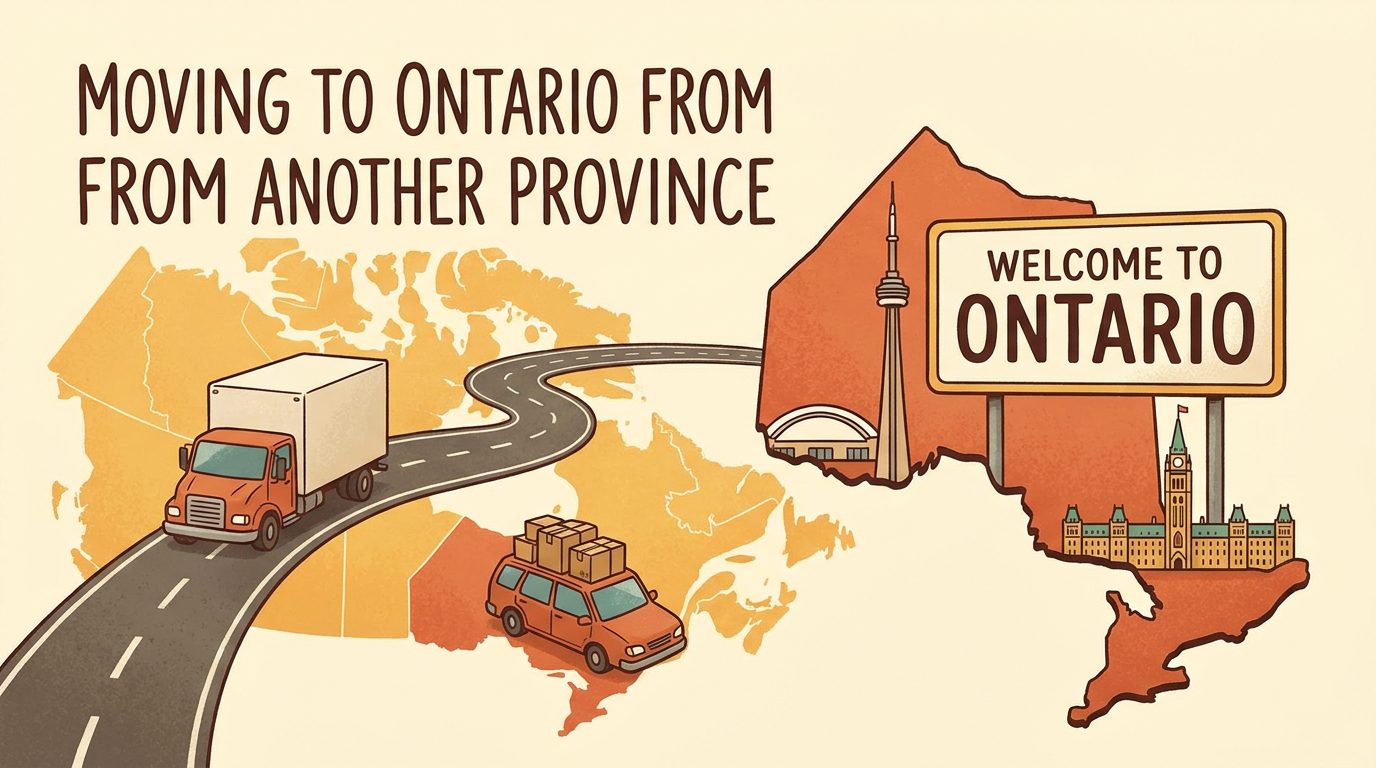
Ontario is one of the most common interprovincial destinations, and it comes with its own set of steps. Healthcare registration happens through the Ontario Health Insurance Plan (OHIP). You’ll apply in person at a ServiceOntario location with proof of residency and your old health card and expect a waiting period of up to three months before coverage kicks in.
On the driving side, you generally have 60 to 90 days to exchange your out-of-province licence for an Ontario one, and most valid Canadian licences don’t require a new road test. Vehicle registration requires new Ontario plates and possibly a safety inspection, and since Ontario uses a private auto insurance model, you’ll need a new policy from a locally licensed provider.
For families, Ontario’s high school diploma requires 30 credits, so it’s worth meeting with a guidance counsellor to see how your child’s existing credits map over. And if you work in a regulated profession, check with the relevant provincial body before assuming your credentials carry over. Ontario also offers a dedicated government resource for newcomers settling into the province, which is worth bookmarking early in your planning.
Moving to another province is a bigger undertaking than a local move, but it’s entirely manageable with the right timeline. Start your research 8 to 12 weeks out. Do a little bit at a time. Set your budget, do your paperwork and switch your healthcare and licence. You can move your own stuff or hire movers to help you. Either way, a good checklist makes everything easier. With a proper checklist in hand, you’re going to be spending less time worrying about logistics and more time settling into your new home.
Need help moving? MPR Movers has simple hourly prices with no hidden fees. Get your free quote today and let us do the heavy lifting for you.
Moving between provinces involves choosing a moving method, decluttering to cut shipping costs, and working through a structured timeline that typically spans 8 to 12 weeks. It also means re-establishing your legal residency once you arrive.
Priority updates include your health card, driver’s licence, vehicle registration, auto and home insurance, CRA and voter registration addresses, utility providers, and any professional certifications tied to a regulatory body.
Physical transit of belongings can take 3 to 14 days. Full legal settling can take up to three months. Emotional and social adjustment often continues for several weeks or months beyond that.
To formally change your province, you need to update your address with the CRA, register for healthcare and a driver’s licence in your new province, and re-register your vehicle. Do all that within each province’s specific timeframes (usually 60 to 90 days for driving documents, up to three months for healthcare).
More Websites : Meadowvale Party Rentals Or MPR Landscapes

Immensely passionate for literature, Arsh-E-Bareen is a freelance writer. She writes content for many renowned firms, including this one. In her spare time, she loves to write sonnets and short stories that touch and inspire people. You can contact her on LinkedIn